Beach warning flags inform swimmers and surfers of the water conditions in the area. The International Life Saving Federation developed a flag warning system utilized by coastal communities worldwide to notify swimmers of potential water hazards. The United States Lifesaving Association endorses this system.
By using similar warning flag guidelines worldwide, beach travelers can be aware of hazards or dangerous water conditions.
Surf conditions are monitored throughout the day on many beaches.
Keep in mind that the beach warning flags provide a general warning only. There may be unforeseen hazards in the water.

Description of Beach Warning Flags:
DOUBLE RED FLAG: Water Closed to Public
The red flag is the most serious and warns swimmers of hazards in the water. Conditions are too dangerous for even the strongest swimmer. Red flags signify strong undertow, rough surf, or rip current activity. You must stay out of the water when there is a double red flag.
ONE RED FLAG: High Hazard
The surf is high, or there are dangerous currents. Swimming is not recommended. If you choose to do so, use extreme caution and only go in if you are a strong swimmer.
Be aware of rip currents. A rip current is a powerful, narrow channel that flows away from the beach. The only way to get out of a rip current is by swimming perpendicular to it (parallel to shore) until you are free from the current. Do not swim against the current. You will get too exhausted and will not make any progress.
Remember that rip currents can form in any large body of water, and there may not be any warning flags posted. Plan ahead and know how to spot a rip current and what to do if caught in one. You can find more information on Rip Currents: Dangers at the Beach.
RED FLAG with a line through Swimmer: Swimming Prohibited
This flag has the same meaning as the double red flag.
YELLOW FLAG: Caution – Medium Hazard
Ocean conditions may be rough, and there is the potential for high surf, dangerous undertows, rocks, a sudden drop-off, or a high population of bait fish that may attract predators. Children or swimmers who are not as strong should use a lifejacket in case they get caught in the current. It is a good idea to swim where lifeguards are present.
GREEN FLAG: Low Hazard
The ocean is unpredictable, so even though it is considered safe to swim, you should still use caution. There could be rip currents, sharks, or other unexpected dangers present.
PURPLE or DARK BLUE FLAG: Dangerous Marine Life
(usually flown with a Red or Yellow Flag)
This flag indicates that jellyfish, stingrays, or other marine life that could cause minor injuries have been spotted in the water. This flag does not indicate if sharks are in the area. It may fly alone or with another colored flag. When swimming, be on the lookout for marine life and stay close to shore.
RED/YELLOW FLAG (half red over yellow): Lifeguard Supervision
Lifeguards protect this area of the beach.
BLACK/WHITE FLAG (quartered): Watercraft Area
This flag designates an area used by surfers and non-powered watercraft.
YELLOW FLAG WITH CENTRAL BLACK BALL: Watercraft Prohibited
Surfboards and other non-powered watercraft are prohibited.
ORANGE WINDSOCK: Wind Direction
This cone-shaped windsock shows the direction of the wind and whether it is unsafe to take inflatable objects in the water.
RED/WHITE FLAG (quartered): Emergency evacuation
This flag indicates there is an emergency evacuation. Swimmers should leave the water immediately. There could be a shark spotted in the area, contaminated water, or the lifeguards need to search the water area.
REGIONAL FLAGS: These are related to activities on that particular beach.
There may be a flag showing where surfing, snorkeling, or other activities are either allowed or prohibited.

You can also check out the international flag standards as established by the International Life Saving Federation.
Flag Chart by the United States Life Saving Association
| Beach Safety Flag | Color | Meaning | Pantone (PMS) | Shape |
 | Yellow | Medium hazard | PMS – 124 | Rectangle |
 | Red | High hazard | PMS – 186 | Rectangle |
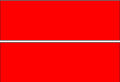 | Red over Red | Water closed to public use | PMS – 186 | Rectangles |
 | Purple | Marine pests present | PMS – 266 | Rectangle |
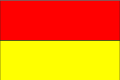 | Red over Yellow | Recommended swimming area with lifeguard supervision | PMS – 186 PMS – 124 | Rectangle with equal, parallel halves. |
 | Black and White (Quartered) | Watercraft area | PMS – 6 (black) | Rectangular flag with four equal rectangular quarters. Black upper left and lower right. White upper right and lower left. |
 | Yellow flag with Black | Watercraft use prohibited (e.g. no surfboards) | PMS – 124 (yellow) PMS – 6 (black) | Rectangular yellow flag with central black ball shape, 500mm diameter. |
 | Orange windsock | Offshore winds present, inflatables should not be used | PMS – 166 | Cone shape 500mm at the hoist-tapering to 300mm x 1500mm long |
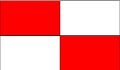 | Red and White (Quartered) | Emergency Evacuation | PMS – 186 (Red) | Rectangular flag with four equal rectangular quarters. Red upper left and lower right. White upper right and lower left. |



Leave a Reply